Our new Founding Competition and how it Links to the Difficulties of Self-Publishing
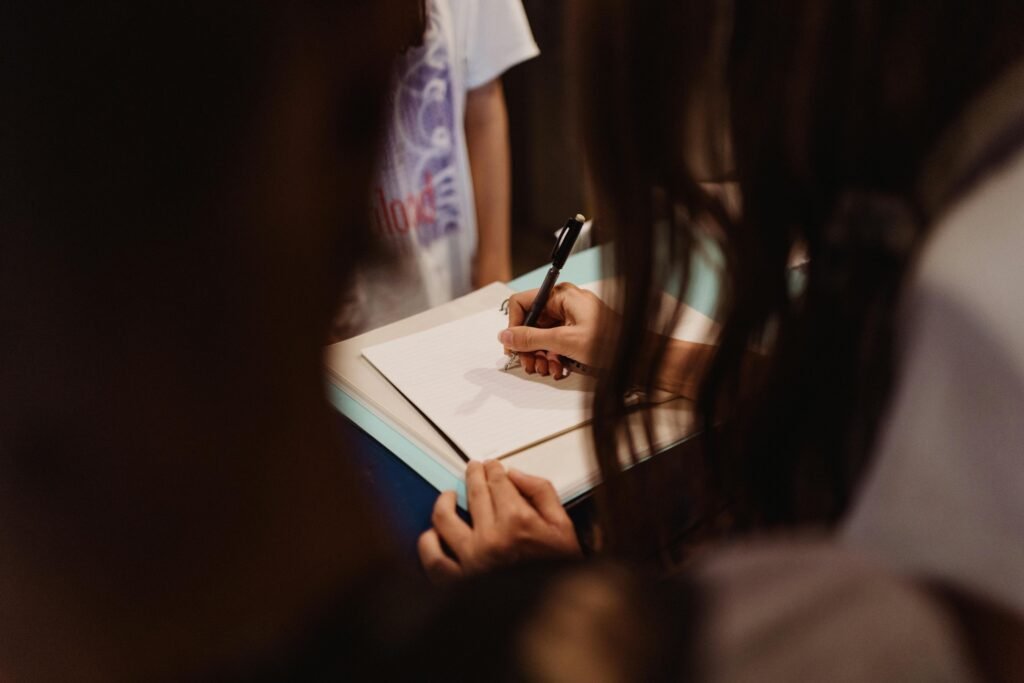
The life of an author is often a solitary one, so much so that it’s become a trope: the trope of the solitary author. But when we picture this isolated author, we often imagine someone who is traditionally published. While they may work alone at their desk, they usually have the backing of an agent, the approval of a publisher, and receive feedback from multiple editors (agents and publishers too). In reality, the career of a traditionally published author is less solitary than we might first think.
The life of an author is often a solitary one, so much so that it’s become a trope: the trope of the solitary author. But when we picture this isolated author, we often imagine someone who is traditionally published. While they may work alone at their desk, they usually have the backing of an agent, the approval of a publisher, and receive feedback from multiple editors (agents and publishers too). In reality, the career of a traditionally published author is less solitary than we might first think.
But what about the self-published author, who removes the publisher and agent from the picture altogether? Well, this role truly does look like the ‘solitary author’. Not only must the self-publish author do the ‘writing alone behind a desk’ part of the job, but they must now take responsibility for everything else too – editing on multiple levels, cover-designs, marketing – all without much or any professional feedback.
Of course, this idea of a solitary writer does make sweeping generalizations of a complex reality. It ignores the fact that many self-published authors work collaboratively with editors, cover designers, and beta readers, or that some self-published authors send their manuscript to companies to publish and market for them (or that by indie we also include small press authors too, who do have a publishing house!). Still, this doesn’t erase the fact that the weight of the final judgement is often much heftier on the back of those who self-publish, or that there’s limited collaboration opportunities after publication for indie authors. Tangled in the web of millions of books released per year, indie authors often struggle in this isolated space, unable to access the collaboration, recognition, or professional feedback that comes more readily with traditional publishing. So then, how can this gap be bridged?
At this point, you might be wondering what all this has to do with our competition. Well, our answer to the challenge of isolation is to offer these elements that are often difficult for indie authors to access (professional evaluation, recognition, and collaboration opportunities), and this is the foundation of our competition.
Why We Created This Competition
So, how do we aim to grant recognition, collaboration, and professional evaluation, and why is this even important to indie authors?
Self-publishing a book has both advantages and disadvantage. The independence I previously mentioned can be a huge positive for many authors, allowing creative freedom and full authorial control. But this freedom can also come with uncertainty. With every decision yours, it can be difficult to know what is working and what isn’t without informed, professional help.
Another problem for self-published authors which their traditionally published peers don’t contend with, is that self-published books lack a visible stamp of approval: that recognition element. Every traditionally published book has been signed off by agents, editors, and publishers who all looked at the work and decided, yes, this is of a good enough quality for readers, whether by the actual merit of the craft and/or commercial appeal. Without this marker, there’s no distinction in the flood of the marketplace between high-quality books and poorly finished works, which is only getting worse with the flood of generative A.I. Indie authors, therefore, have to capture readers’ attention in other ways, often through algorithm-driven tropes. Suddenly, the idea that self-publishing is a place to publish creative works outside the market trends flips on its head as self-publishing becomes even more commercially driven than traditionally published books.
So, at The Story Star Standard, we’re trying to counter this. While we can’t change the entire market, our aim is to spotlight excellent indie books through structured, professional craft analysis, awarding Story Star badges to high-quality work and placing them on our curated Indie Book Catalogue, found on our website.
Then, what about our competition? Well, this aims to be an extension of our mission. To celebrate our launch, we wanted to create a way to spotlight excellent indie authors, free of charge.
How the Competition Works
All indie authors – both self-published and small press published – who have already published a book (at any year in the past, even as early as 2007!), or who plan to publish within the next six months*, are invited to submit a 10,000-word extract from their novel (any novel that they own the rights to, of their choice) along with a synopsis (typically around one to three pages, or 300 to 1,000 words).
From these submissions, a selection of authors will be invited to submit their full manuscript. These titles will form our longlist. From there, we will assess each manuscript under our Story Star Standard framework and determine which books move forward to the shortlist and, ultimately, to a winner (and potentially a runner-up too, depending on submission quality).
What Authors Gain from Entering
Every shortlisted author will receive a full, professional review conducted under the Story Star Standard framework, along with an official Story Star badge and rating, all free of charge. Ratings range from Bronze to Rugby, alternatively called one to five Story Stars. Achieving even one star represents a commendable level of craft, while four stars (Diamond) are exceptionally rare and five stars (Ruby) are reserved for a book that achieves a perfect score.
Shortlisted books will also be permanently added to our Indie Book Catalogue, a curated space for quality-assured indie titles that achieve a Bronze rating or higher. Shortlisted authors will also be invited to take part in collaboration opportunities such as interviews, blog features, and promotional content.
From the shortlist, one book will be named the winner of the Founding Competition and will be permanently recognised in The Story Star Standard archives, with additional features and in-depth collaborations highlighting their work.
But even if you don’t reach the shortlist, authors are not left out. All longlisted authors will be featured as part of a public list on our website, and since our competition is completely free to enter, there’s no financial risk involved if you don’t make any of the lists. It’s an opportunity to put your work forward, receive professional consideration, and give your book a chance to be showcased.
Looking Ahead
We hope this is just the beginning for us, and we’re doing our best to create a space where indie authors are recognised for their craft and can access thoughtful, professional feedback in what is often a solitary publishing landscape.
If this competition sounds like something you’d like to be a part of, we’d love to see your work. You can find more information on the competition on our website here: The Founding Competition. You can also find the submission link here.
The deadline is just two weeks away! Thank you for everyone who’s submitted so far.
You can find this article and more like it on our Substack!